
Finding a strange lump, bump, or bald spot on your horse's skin is always concerning. Even if it doesn't seem to bother them, its mere presence means something isn't right. You don't want to call the vet for every minor thing, but if your horse is showing signs of a horse skin condition it can cause you a lot of worry.
Thankfully, there are many skin-related issues you can treat on your own.
The trick will be determining exactly what kind of issue you're dealing with. Applying the wrong treatment to a minor skin condition may make the problem worse. Here's how to recognize some of the most common skin conditions your horse can get and what you can do about them.
#1 - Rain Rot (rain scald)
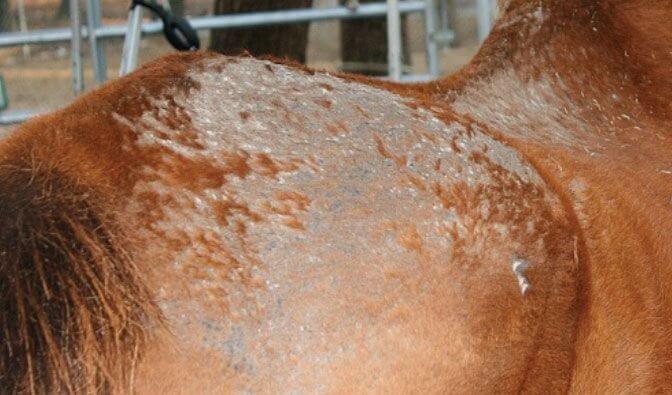
This bacterial infection is often found on horses that like to stand in the rain or tall, dewy grass. It appears as a scabby crust of bumps that causes the hair to mat into raised tufts. Horses get it along the topline where rain runs down their backs, their shoulders, hindquarters, faces, and lower legs. Eventually, the scabs peal off and leave patches of bare skin.
At minimum, rain rot is uncomfortable for the horse, and at worst, it's very painful. The best thing you can do to prevent it is keep your horse in dry living conditions. If you start to notice the tell-tale scabs, purchase an anti-microbial shampoo and disinfectant rinse specifically advertised to treat rain rot. Treatment will depend on the product you choose, but you'll most likely need to use the rinse every day for at least a week.
# 2 - Dandruff (primary seborrhea)
This minor skin condition usually goes unnoticed by the horse, but not the owner. It's caused by either dry or oily skin that flakes off like sand or peels away as large waxy crusts. The base of the mane, tail, girth area, and other places that accumulate sweat are most often affected. Because dandruff doesn't cause the horse pain or even itchiness, treatment isn't always a necessity. But if you want your horse to look its best, there are a number of simple solutions.
Dandruff is often hereditary, and while there's no way to cure it entirely, it is easily managed. Choose a dandruff shampoo specifically formulated for horses and scrub him down with a soft-bristled brush. It may take several applications to see improvement. If the condition doesn't get better, there may be an underlying cause that's more than skin deep. In that case, consult your veterinarian.
#3 - Ringworm
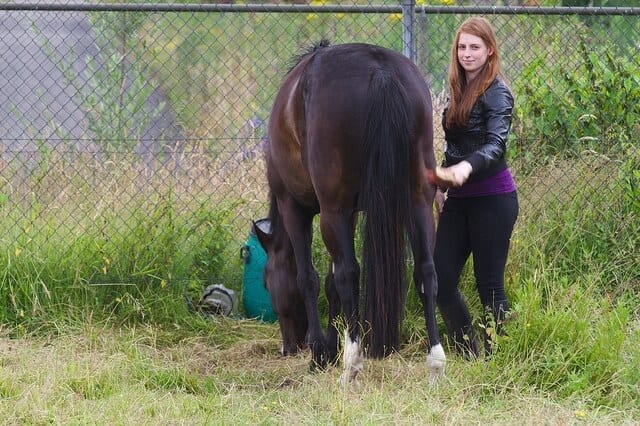
Ringworm is a fungus that attaches itself to horses as well as humans. It's identified as a round patch of hairless skin with a crusty scab. The most common placement for ringworm is on the face, shoulders, neck, chest, or under the saddle. It's not pretty to look at, but ringworm rarely bothers a horse. That doesn't mean it shouldn't be treated, however. It spreads quickly and is highly contagious.
The best treatment method for ringworm is to first isolate the horse to keep the fungus from spreading. Then clip the hair around the area to reduce its food source. Dandruff shampoo can be an effective way to treat the lesions, and if that doesn't work, invest in an antifungal antiseptic. It may take a few tries to find a product that works. Apply the medication to clean skin until the condition goes away.

#4 - Warts (papillomas)
These cauliflower-like growths are easily identified. They're usually pink in color and no bigger than peas. They can come in clusters or individually, and they're most commonly found around the muzzle, near the eyes, on ears, genitals, and lower legs.
Warts are usually harmless and disappear after a few months. If your horse is older or has a compromised immune system, however, it could take up to a year for a stubborn wart to go away on its own. If the warts are inhibiting your horse's ability to eat or being irritated by tack, you shouldn't wait for this natural process. Ask your veterinarian about laser removal or drugs that stimulate immunity.

Horse Courses by Elaine Heney
- Listening to the Horse - The Documentary by Elaine Heney & Grey Pony Films
- Shoulder In & Out Training for better balance, bend & topline development with your horse
- Over 110+ Polework Exercises & Challenges to Download
- Dancing at Liberty & Creating Connection with Your Horse (11 lessons) - Grey Pony Films
Many of these conditions can also be caused by underlying problems that need expert medical attention. In these cases, treating the bigger picture will usually improve your horse's skin. If you're not sure what's going on with your horse's skin, it's always best to consult a veterinarian.

Leave a Reply